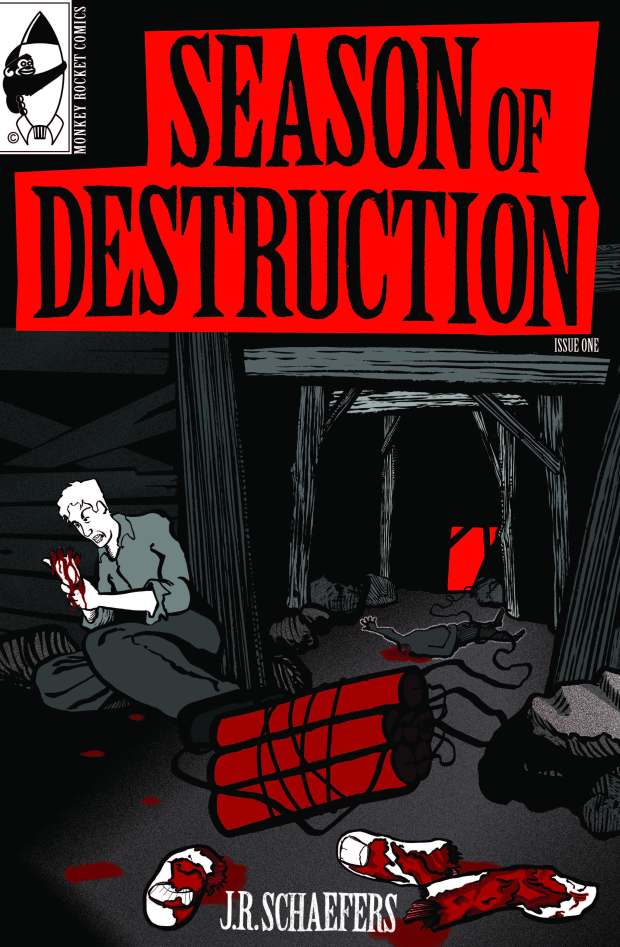
SEASON OF DESTRUCTION is a pre-apocalypse vampire tale set in the spring and summer of 2028 – the year when modern man’s excess hurtles beyond social and environmental points of no return.
It’s a blue-collar biodiesel “Mad Max” meets small-town “Scarface” with a blacktop Alamo-style siege thrown in – all crossed with a sensible, stripped-down reinvention of the vampire as an obedient servant of Death: A converted creature who remains humanly impulsive, selfish, irrational and reactive. Fallible, rather than unflappably calculating and refined.
Set free from the worn-out rules, rote motivation and bored sophistication of their Old Horror ancestors, these vampires are like the gory reality of episiotomy childbirth compared to the myth of the Stork.
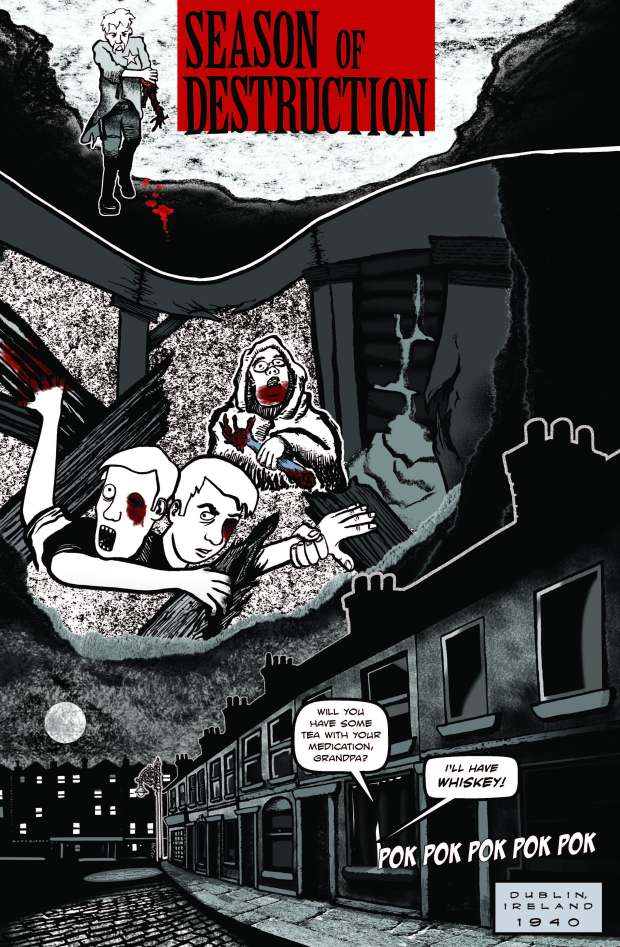
The vampires at the crooked heart of this story are three brothers from Napoleonic-era France, compulsive and delusional 20-something killers who feel evangelically called to serve the goddess they call Death by arranging one-way trips to Her realm for every soul they meet. Their murderous tour of North America is temporarily halted in 1870, when a botched abduction leaves the brothers entombed in a Nevada mine.
The most original fold in the fabric of this tale arises when, after more than 150 years of hibernation, the vampires are revived by the spilled blood of methamphetamine users. The trio are instantly and utterly addicted: not to the toxic drug itself, but to the blood of addicts who intravenously use meth. Our vampires find themselves quite at home in the oil-starved American empire-turned-nightmare of 2028 – a world whose panicked population has descended into squalor and chaos. But the frankendrug’s grip draws their destinies into a tight spiral of addiction, and their plans to return to modern France are sidetracked, then forgotten.
To ensure supply of their blood-and-meth cocktail, the vampires ally themselves with a sociopath meth cook and his small-town cartel of saggy-trousered gangster-pretenders in southern Oregon’s lawless high desert. The nearly immortal vampires work as mercenary muscle, protecting the gang from rivals and enforcing collections in return for their pick of sacrificial addicts from the customer base.
As the drug erodes the vampires’ killer instincts and relative rationality, they plot to renew their lifeblood by getting clean through the same sinister ceremony that converted them as children: the moonlight ritual sacrifice of a pregnant woman. But the only available expectant mother is beyond their reach, huddled with a Noah’s Ark cross-section of the town’s population at ToroTread – a besieged Les Schwab-style (Google it) tire-and-brake service station where a Hanson Brothers-type “Slapshot” crew of loony but loyal local boys have more than enough guts and improvised resources to put up a deadly fight.
As the collapse of civilization creates a precipice of doom whose approach cannot be stalled or escaped, an ancient figure of local Native American legend rises to restore earthly order through savagely indifferent means, in an attempt to escort the latest failed incarnation of man from the world’s stage.
This final mythical element inoculates the reader’s mind to consider a shocking possibility: that our lofty pinnacle as a modern society has already been reached – even surpassed – many times before, and then lost and forgotten. Man is far too arrogant to consider that the universe moves in cycles of time so vast that the chronology of our species amounts to nothing more than a tiny bit of string – a fiber too small to pick up, let alone tie in a knot, or connect to anything around it.
Western scholars see Egypt’s pyramids as bronzed baby shoes – curious symbols of primitive development that were outgrown and discarded. But these and other mysterious monuments are more like the names of former pupils written inside the cover of a handed-down textbook. That textbook is the collective experience of civilized Man, and the cultural collapse that frames this story portrays the crumbling world of 2028 as the failure of Earth’s latest student-civilization.
The only timeline that holds a man’s attention, however, is the span of his lifetime. The only consequence that truly concerns him is the manner and moment in which his time will end.
And the end of absolutely everything is what this story, and its greater trilogy, are all about.
SEASON OF DESTRUCTION is a tale of consequences and survival. Betrayal among brothers. Broken promises paid in cold blood.
It’s a story about the beginning of the end of the world.
 SEASON of DESTRUCTION